
What’s New in the 2025–2030 US Dietary Guidelines for Americans?
By Lizzie Streit, Registered Dietitian Nutritionist
MS, RDN, LD
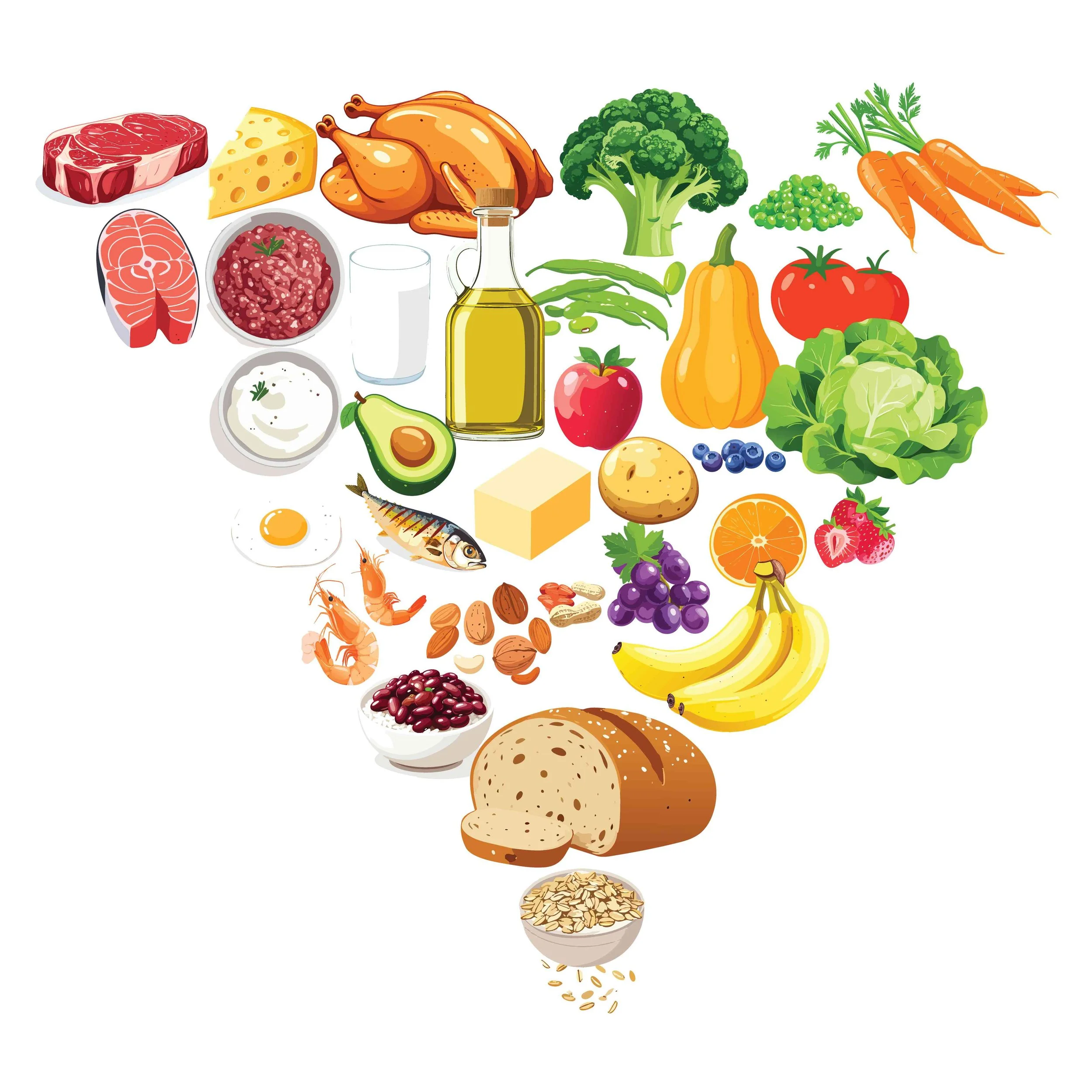
In January, the United States Department of Agriculture (USDA) and Department of Health and Human Services (HHS) released the 2025-2030 Dietary Guidelines for Americans. The new guidelines are significantly shorter than previous editions and claim to be “the most significant reset of federal nutrition policy” in the country’s history. These federal guidelines are designed to inform nutrition policy and public health recommendations across the United States.
In addition to a variety of differences from past guidelines, there are also many similarities that are still in line with recommendations from other expert organizations. However, information within the specifics of the general recommendations contradicts some of the conclusions. This article reviews the new guidelines and the main takeaways.
Overview of the 2025-2030 Dietary Guidelines for Americans
The new US Dietary Guidelines place a particular emphasis on eating “real food” and returning to the “basics” of protein, dairy, vegetables, fruits, and healthy fats. They discourage highly processed foods made with refined carbohydrates, added sugars, sodium, unhealthy fats, and additives. The stated goal of these recommendations is to reduce chronic diseases associated with poor diet.
The specific messages within the guidelines include:
Eating the “right” amount for you by focusing on individual calorie goals and portion sizes and staying hydrated via water and unsweetened beverages.
Prioritizing protein, with a particular emphasis on animal sources but also the inclusion of plant-based proteins. This section encourages baking, broiling, roasting, stir-frying, and grilling over deep-frying meats and eating meat without added sugars or chemical additives. The last point under the protein guideline emphasizes eating 1.2 to 1.6 grams of protein per kilogram of body weight per day.
Eating dairy, especially full-fat dairy with no added sugars, in the amount of three servings per day.
Incorporating fruits and vegetables of all kinds—fresh, frozen, dried, or canned (with no added sugars)—in the amounts of three vegetable servings per day and two fruit servings per day.
Eating healthy fats, with an emphasis on omega-3-rich seafood, nuts, seeds, dairy, olive oil, butter, and beef tallow. This section also includes the guideline to not exceed 10% of daily calories from saturated fat.
Prioritizing whole grains, in the amount of two to four servings per day, and limiting highly processed and refined carbohydrates.
Limiting highly processed foods, added sugars, and refined carbohydrates, including chips, cookies, candy, sodas, and energy drinks. This section also calls out limiting artificial flavors and preservatives, petroleum-based dyes, and non-nutritive sweeteners. The suggested limit for added sugar is no more than 10 grams in one meal.
Limiting alcoholic beverages, with no specific guidelines for a recommended number of drinks per day.
Eating foods that nourish a healthy gut microbiome, including fermented foods, fruits, and vegetables, while limiting highly processed foods that may disrupt gut bacteria.
Keeping sodium intake to less than 2,300 mg per day for anyone 14 years of age and older.
Key Similarities and Differences from Previous Guidelines
While the opening statement of the guidelines presents them as a revolutionary reset and shift back to nutrition basics, the overall tips are not that different from past guidelines. Recent iterations have also emphasized eating fruits and vegetables, protein, dairy, healthy fats, and whole grains to promote health and prevent disease. The 2025 version reiterates the same limits on daily saturated fat and sodium intake from previous guidelines, and the information pertaining to nutrition throughout the lifecycle is also similar.
Where differences appear is within the specifics included under each overarching tip. The new guidelines emphasize full-fat dairy, which differs from previous recommendations to choose mostly non-fat and low-fat dairy. There is also a focus on using butter and beef tallow for cooking, a stark difference from the 2020 guidelines’ suggestion of vegetable oils.
It’s worth noting that the advice pertaining to fats also includes mistakes, such as indicating that olive oil, butter, and tallow are good sources of essential fatty acids (they’re not). The emphasis on full-fat animal foods also contradicts the suggested limit on daily saturated fat consumption, since it would be challenging to eat a lot of these foods and stay within the limit.
This is further reflected in the food pyramid visual presented in the guidelines that prominently features high-fat animal foods despite repeating the same bottom line on saturated fat from previous guidelines. The pyramid portrays whole grains at its tip, which doesn’t accurately reflect the suggestion to eat two to four servings per day.
Another key difference is the recommended amount of protein per day, with previous guidelines suggesting that protein make up 10% to 35% of daily calories and the new version recommending 1.2 to 1.6 grams per kilogram per day. Protein needs vary depending on the person, and some people do benefit from increased protein intake. Still, most Americans already consume enough protein.
Old guidelines also suggested a limit on added sugars of 10% of total daily calories, whereas the 2025 version emphasizes that no amount is considered part of a healthy diet. The suggestion is to limit added sugars to no more than 10 grams per meal if they are consumed.
Finally, the old suggestion of consuming no more than two drinks per day for men and no more than one drink per day for women has been removed from the new version of the guidelines. Limiting alcohol is still suggested.
Bottom Line: What the New Dietary Guidelines Mean
The 2025-2030 Dietary Guidelines for Americans certainly break from past versions. They’re a lot less comprehensive, emphasize full-fat animal foods, and roll back certain suggestions while leaving others in place. The specifics of each category of tips, as well as the inverted food pyramid image, include contradictions. However, the core tenets of eating a balanced diet of fruits, vegetables, dairy, whole grains, protein, and fats to promote health and prevent disease remain.
It’s important to point out that the dietary guidelines are only one source to consider when implementing nutrition recommendations. Independent agencies, such as the American Heart Association (AHA), American Diabetes Association (ADA), and Academy of Nutrition and Dietetics (AND), offer updated, evidence-based recommendations that can help inform what people choose to eat. Considering guidance from a variety of sources is a key aspect of making informed dietary choices. Healthy For Life Meals follows the guidelines of these organizations to help those with heart disease, diabetes, high blood pressure, and other conditions manage their health.
Note from Healthy For Life Meals: Our meals are thoughtfully designed to meet expert guidelines and include a variety of fruits, vegetables, lean proteins, healthy fats, and whole grains. Choose from our three menu options to get started with healthy diet meal delivery today!